


New paper in Apoptosis
30 03 2026
Category: Publications
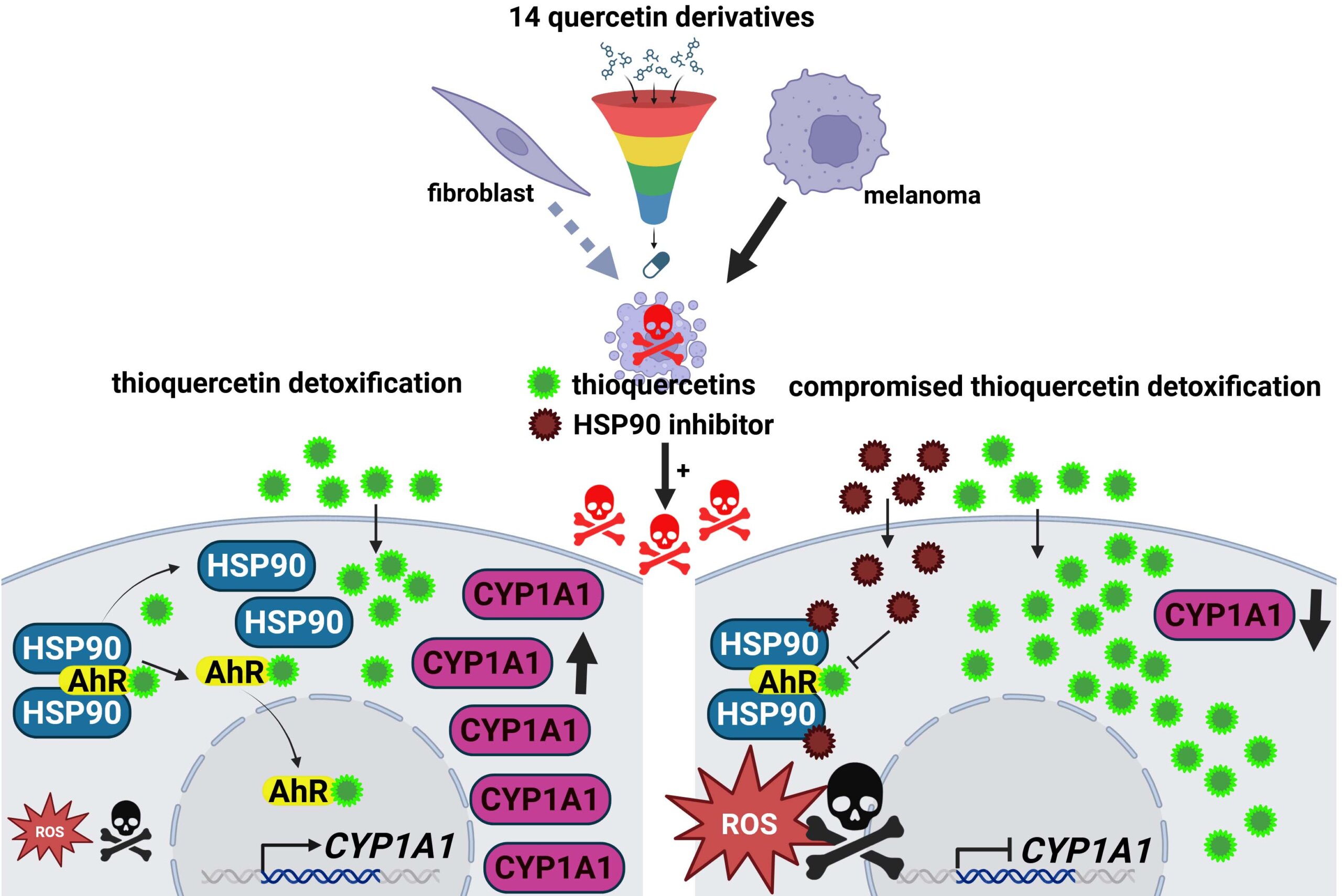
The study investigated 14 newly synthesized quercetin derivatives designed to overcome the low bioavailability of natural quercetin in melanoma treatment. The researchers successfully identified three thioquercetin derivatives (thioQ, thioQ(OAc)4, and thioQ(OAc)5) that exhibit significantly higher anticancer activity at low micromolar concentrations compared to unmodified quercetin. The main success of the research lies in the discovery of a synergistic effect: combining these novel thioquercetins with an HSP90 inhibitor (17-DMAG) dramatically potentiates their efficacy. This combination triggers lethal oxidative stress in cancer cells by compromising their internal detoxification pathways (AhR/CYP1A1). Furthermore, the compound thioQ(OAc)4 was identified as a promising senolytic agent, capable of eliminating drug-resistant senescent melanoma cells. These findings offer a new strategy for designing more effective antimelanoma therapies.